Holding Space and Staying True

David Schlosz • March 28, 2025

An Intimate Conversation with Dr. Rachelle Smith on Black Womanhood, Leadership, and Inclusive Transformation in Academia


“Be yourself. Even when it’s costly. Especially when it’s costly.”

 – Dr. Rachelle Smith


I recently had the extraordinary privilege of sitting down with Dr. Rachelle Smith—counselor, scholar, higher education leader, wife, mother, and advocate for justice—to discuss her journey in academia as a Black woman, her research on inclusive excellence, and the life values that sustain her.


What unfolded was far more than a professional interview. It was a deeply human conversation about faith, family, leadership, and the emotional labor of working in spaces that were never built for you. We laughed, reflected, explored painful truths, and imagined hopeful futures. And in the end, I walked away profoundly moved—not only by her brilliance but by her heart.


This article is both a tribute to that conversation and an invitation to listen deeply to the voices of Black women leading transformation in quiet, consistent, and courageous ways.


“I Didn’t Plan to Be Here, But I Belong Here”: Rachelle’s Unexpected Calling into Counseling


Dr. Smith didn’t set out to become a counselor. Like many of us, her journey was shaped more by the quiet nudges of life than a five-year plan. Yet when she found the field, she recognized something familiar: a place where deep listening, empathy, and the honoring of lived experience were not just welcomed—they were necessary.


“I fell in love with counseling,” she shared. “It gave me language for what I had always done naturally.”


Her deep respect for stories—especially the ones people don’t always feel safe to tell—has become a guiding thread in her work, whether she’s mentoring students, assessing institutional equity, or parenting her children.


And while her professional ascent has been marked by impressive accomplishments, it’s her ability to remain grounded in her values that most stood out to me during our conversation.


The Invisible Burden: What It Means to Be a Black Woman in Academia


There’s a particular kind of emotional labor that comes with being a Black woman in predominantly white academic spaces—one that Dr. Smith articulated with both candor and clarity.


“There’s this constant filtering that people do,” she explained. “They see my credentials, my title, my work—and they still interpret it through their preconceived ideas of what a Black woman is.”


She recalled moments of being underestimated, silenced, or read as “aggressive” when simply asserting boundaries. Code-switching—adjusting how she spoke, dressed, or presented herself—offered no guarantee of safety or acceptance.


“I realized,” she said, “that no amount of self-censoring could stop people from seeing me through their own lens. So why not just be authentic?”


That authenticity has become both her armor and her invitation to others. Rather than contorting herself to fit institutions, Rachelle challenges institutions to stretch toward her—and toward others who’ve historically been excluded.


Her courage to “stay true, even when it’s costly” is one of the most powerful leadership lessons I’ve ever encountered.


Faith, Family, and the Power of Saying “No”


Our conversation took a beautiful turn as we talked about balance. Dr. Smith is not only a respected scholar and administrator—she’s also a wife and a mother. During the pandemic, like many working parents, she had a reckoning.


“I realized how much I had been absent—not just physically, but emotionally,” she said. “I was giving everything to work and leaving scraps for the people who mattered most.”


The impact was sobering. And liberating.


Rachelle began practicing the sacred art of saying “no.” She re-centered her family, her health, her spiritual life. She and her husband—a fellow public servant—created a shared vision for their home and careers, treating their marriage like a collaborative project grounded in mutual support and clear communication.


“We don’t compete with each other’s success,” she told me. “We make room for it.”


In an era where hustle culture often glorifies burnout, Dr. Smith’s approach offers something revolutionary: wholeness over performance, presence over applause.


Respecting the Pain of Others: A Call to Conscious Allyship


One story Rachelle shared has stayed with me. She was at the gym, and overheard another woman speaking on her cellphone about the injustices she was witnessing unfold all around her in today's political climate. The conversation reminded Rachelle that there are allies everywhere that we may not even be aware of. 


Her point  was to emphasize the importance of active listening and standing up for others, even when it’s uncomfortable. Rachelle believes leadership—and indeed humanity—requires us to get proximate to the pain of others and not look away.


Whether in her leadership role or in everyday conversations, she models this proximity. She doesn’t wait for people to “deserve” empathy. She simply offers it, as a radical act of care.


Inclusive Excellence: Rachelle’s Research and Institutional Courage


Dr. Smith’s academic research is as bold as it is brilliant.


Drawing on Dr. William Cross’s theory of Nigrescence—which maps out the identity development of Black individuals—Rachelle had the insight to apply this framework to institutions themselves. She asked: What does it look like for a university to go through identity development? Can a campus experience a kind of awakening around race, inclusion, and equity?


Her framework for Inclusive Excellence Assessment offered a new lens: rather than assessing equity in terms of outputs or checkboxes, she examined how deeply an institution had internalized justice at the identity level.


While some institutions embraced her model, others resisted. Her work challenged the status quo—and that made people uncomfortable.


Still, she presses on. She knows her research has the power to transform not just policies, but hearts.


Advice to Women of Color: “Don’t Stay in Spaces That Don’t Value You”


As we neared the end of our conversation, I asked Rachelle what wisdom she might offer to other women of color navigating spaces where their brilliance is often ignored or resisted.


Her response was gentle but firm.


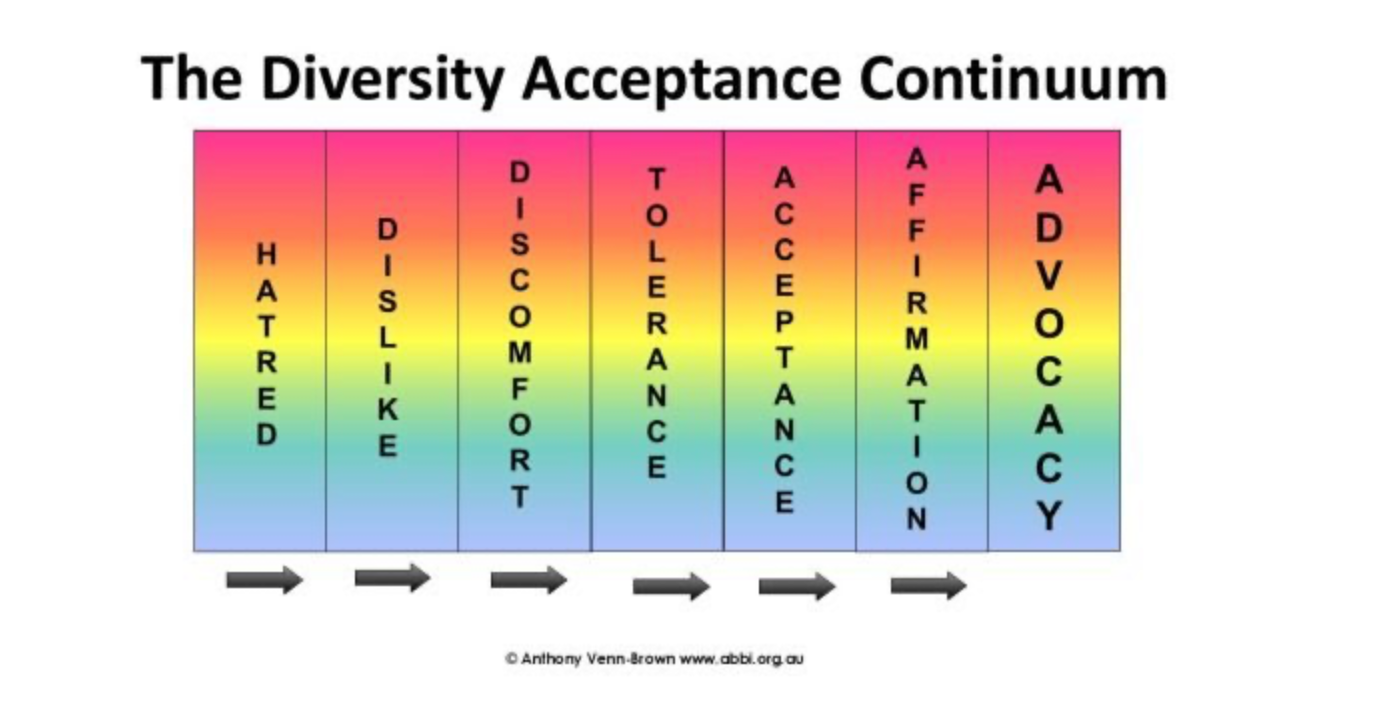
“Don’t tolerate spaces that don’t value you. Seek out appreciation, not just tolerance. And talk to God about everything—your health, your relationships, your career. Let Him be part of it all.”


Her words reminded me of a gospel song I heard as a child—one that spoke of God’s attentive love for even the smallest sparrow. In Rachelle’s theology, there is no area too mundane or too messy for divine attention. And that’s exactly what makes her leadership so rare: it is deeply spiritual, deeply rooted.


Because stories like Rachelle’s matter. They are not only medicine for the soul—they are maps for the road ahead.


Final Words


Dr. Rachelle Smith is a rare kind of leader—unapologetically brilliant, deeply grounded, and fiercely compassionate. She reminds us that leadership is not about climbing ladders, but about clearing paths. Not about being palatable, but about being true.


In a world that so often asks Black women to shrink, to defer, or to prove their worth, Rachelle offers a liberating alternative: Be who you are. Lead with love. Say no when you need to. And never let someone else’s comfort cost you your voice.


I’m grateful beyond words for her wisdom, and I can’t wait for you to hear more when the full podcast episode is released. Until then, I hope this reflection stirs something in you—as it did in me.


Let’s keep building spaces where truth, joy, and justice are not just welcome—but expected.


Stay connected:

 Follow me on LinkedIn for updates: https://www.linkedin.com/in/davidschlosz/

 Subscribe to the Project I Am podcast: https://rss.com/podcasts/project-i-am-with-dr-david-j-schlosz/

Reach out if you’d like to join our monthly Mentoring Moments sessions.

By David Schlosz January 20, 2026
My conversation with Josh Rosen is, at its core, about the price of building something big. Not the visible markers; companies launched, revenue milestones, awards, and headlines; but the internal journey that rarely makes it into the highlight reel. We wanted to go underneath the “success story” and talk about what it has demanded of him: the pressure, the identity questions, the loneliness, the impact on mental health, and the way his definition of success has changed over time. The central tension is one many founders live with: how do you pursue ambitious dreams in a way that honors both ambition and humanity? Josh captures his approach in a line he shares right at the beginning: “I need to stand because motion creates emotion.” It’s a simple phrase, but it reveals something essential: his commitment to actively engage his inner world, not just endure it. The Making of a Leader: Duality, Sacrifice, and Audacity Publicly, Josh shows up as a “dream maker”. A leader who runs a digital media company and helps brands with go-to-market strategy. He talks about mentorship with genuine pride, describing himself as a “guiding light” for his team. What matters most to him isn’t a vanity metric; it’s watching people in his company reach real-life milestones: buying homes, building stability, starting families. He calls that his biggest standard of success. But privately, his story has another layer. Under the “unflappable” exterior is a deeply sensitive person who feels the weight of responsibility constantly. While his wife may describe him as someone who “doesn’t get nervous,” Josh tells the truth more plainly: “I’m nervous all the time. I just channel it in a different way.” His drive is rooted in a desire to protect the people closest to him and to do right by those who depend on him. A major theme in our conversation is learning when and how to be vulnerable. Leadership often demands steadiness, especially when you know people’s livelihoods are tied to your decisions. When the pressure spikes, he can’t always afford to fall apart. And still, he’s intentional about letting his team see the human being behind the role—often in moments like off-sites or holiday gatherings where the mask naturally comes down. The Weight of Responsibility and the Loneliness at the Top That gap between external perception and internal experience creates isolation. Josh doesn’t describe himself as an optimist. He calls himself a “measured realist,” and that realism comes with a particular kind of emotional load: the persistent awareness of what could go wrong. Over time, the self-doubt doesn’t disappear, it evolves. In some ways, it intensifies. He reflects on how different it felt in the early years, when the team was small and the consequences were simpler. Now, after 14 years and a staff of about 45, many of whom have been with him eight to ten years, the stakes feel enormous. “It can’t blow up. It can’t go away,” he says. “There’s too much riding on it.” That pressure shows up in the quiet moments, what he calls the “shower thoughts”, the relentless private questioning: Am I the right person to lead this? Am I making the right decision? And while people might see the glamour, travel to San Francisco, New York, Europe, they rarely see what it costs. Josh shares a painful example: the first year of his third child’s life, when she mostly knew him through FaceTime. Missed bedtimes. Missed bath time. The moments you can’t put back. That’s where the deeper existential questions emerge: What’s the point? Am I doing the right thing? Josh believes the “founder spirit” is often defined by the ability to compartmentalize, to hold grief and purpose at the same time, and to let sacrifice become fuel for something bigger. Ultimately, what he’s chasing isn’t just money. It’s freedom, especially the kind that buys time. The dream isn’t the number in the bank account; it’s being present on a random Wednesday at 4 p.m. for a ballet recital. The Reluctant Entrepreneur: Formative Moments and Rejection One of the more surprising parts of Josh’s story is that he doesn’t frame himself as someone who always wanted to be an entrepreneur. He calls himself a “reluctant entrepreneur”, pushed toward building his own path through rejection and disillusionment. He talks openly about not being a great student and struggling to respect teachers who hadn’t “been there.” Growing up in the ‘90s, he felt disconnected from traditional career narratives and more drawn to creativity and connection. A high school teacher, someone with real-world experience at Ogilvy, saw potential in him and opened a door into advertising. Then, at 19, his world cracked open. His parents divorced. His father experienced a serious mental health breakdown. His mother, who had been a career housewife, struggled financially. Josh describes the desperation of those years, including forging a document to receive a college bursary, just to cover food and gas. When that check arrived, around $600 or $800, it became a turning point. He felt a conviction settle into his bones: I will never rely on anyone again. I will be responsible for my own destiny. That resolve made him focused, but also impatient. He didn’t want to “pay his dues.” He felt corporate culture was skilled at “whack-a-moling” ambitious young talent. Every rejection became a stored source of motivation. The final push into entrepreneurship came when the company he worked for was sold to private equity. He was repeatedly asked to lay people off members of his own team. With a young family, the emotional cost wrecked him. Taking away someone’s paycheck wasn’t just “business.” It felt personal. It broke something in him and clarified what he didn’t want to be part of. When the opportunity to co-found his first company appeared, it led to a pivotal conversation with his wife: “If we don’t do it now, when are we going to do it?” Josh credits her support as foundational. She could see that, for him, this wasn’t just ambition. It was purpose. It was happiness. It was the future they wanted. Grounding and the Blur of Identity Josh names something many founders feel but rarely say out loud: the way identity fuses with the business. “I am the business, the business is me,” he says. And when you haven’t taken a true vacation in 14 years without work tagging along, it’s easy to start asking dangerous questions in low moments: Am I only what my net worth says I am? Is that all I am? What counterbalances that, for him, is family. Home life has a way of stripping the illusion off success. No matter what happens professionally, the garbage still needs to go out. Someone still has to get to hockey practice. In that space, you’re not “founder” or “CEO.” You’re Dad. You’re husband. That grounding is part of what helps him keep going without losing himself. Managing Stress and Seeking Support Josh is candid about what stress has looked like in his body and behavior: vaping addiction that escalated during COVID, poor diet, sleep deprivation, irritability. He’s developed a framework rooted in a simple truth: two things can be true at the same time . You can be overwhelmed and still grateful. You can feel crushed and still recognize your privilege. His strategy is to build tools that help him move through emotion faster: to compartmentalize, analyze, embrace, and then release. He speaks highly of therapy, crediting a long-term therapist with giving him practical tools for processing his internal world. He and his wife also do couples counseling, which he describes as a “tune-up”, maintenance, not emergency. One of his biggest takeaways: learning to ask for what you need has been a major unlock. And he returns again to the body: movement as release. The gym, for him, isn’t just about fitness, it’s about clarity. Solutions come in post-workout stillness. Reframing and Resilience A core element of Josh’s philosophy is reframing. He shares a story about his 12-year-old daughter struggling to make friends after a move. He helped her name the “worst case scenario” and then softened it: if today goes badly, she comes home to a family who loves her, eats ice cream, and tries again tomorrow. That shift didn’t erase the fear, but it made her brave enough to act anyway. That same resilience shows up in one of his most defining entrepreneurial memories: a time when the company was close to collapse, there was no money for rent, and he felt depleted in every direction. When his partner asked what they were going to do, Josh answered with a kind of stubborn, grounded courage: we’re going to get up, go to the office, and do the best we can, because that’s what we have left. The next morning, a check from their biggest client was waiting. That moment cemented a belief that has carried him: sometimes the win is simply putting one foot in front of the other. Lessons for Others and a Legacy of Humility Josh’s leadership ethos is surprisingly simple: build the kind of company the younger version of you would want to work for. He emphasizes that people don’t really work for companies, they work for people. And when new hires join, he tells them: “You don’t work for me. I work for you.” When I asked what he would say to a founder quietly burning out, his message was direct: you’re not alone. He urges founders to reach out, to tell the truth, to be vulnerable. He also warns against the glossy mythology of success online. For every Rolex and Lamborghini, there’s often a hidden stack of unpaid credit cards. His advice: live quietly. Let your actions speak. The legacy he wants most isn’t status, it’s humility. He wants his children to understand that nothing meaningful happens overnight. He uses examples like Olivia Rodrigo’s “overnight success” to reinforce the truth: what looks sudden is usually built on years of effort. Josh’s mantra is “Fortune favors the brave.” But in his telling, fortune isn’t primarily money. It’s the life he’s created, the family, the freedom, the ability to be present. In the end, he defines wealth in human terms: the family he’s built and the life they get to live.
By David Schlosz January 20, 2026
A MENTORING MOMENTS LIVE RECAP  WITH CALEB MATTHEWS
By David Schlosz May 20, 2025
An Interview with Whitney Sutherland, LPC.
By David Schlosz April 1, 2025
Counselor Success and Support Initiative
By David Schlosz March 30, 2025
Dr. Charles Heaton on Identity, Inclusion, and the Power of Vulnerability
By David Schlosz March 14, 2025
A Conversation with Pastor April on the Evolving Needs of Christians
By David Schlosz March 9, 2025
HOW WE HAVE LIMITED THE DIVINE
By David Schlosz February 26, 2025
Embracing the Present, Finding Purpose, and Growing Daily
By David Schlosz February 22, 2025
A Conversation with Counselor and Researcher Whitney White
By David Schlosz February 3, 2025
How a Few Words Can Change a Life